Runner's Knee in Austin: Why the Problem Is Usually Not Your Knee
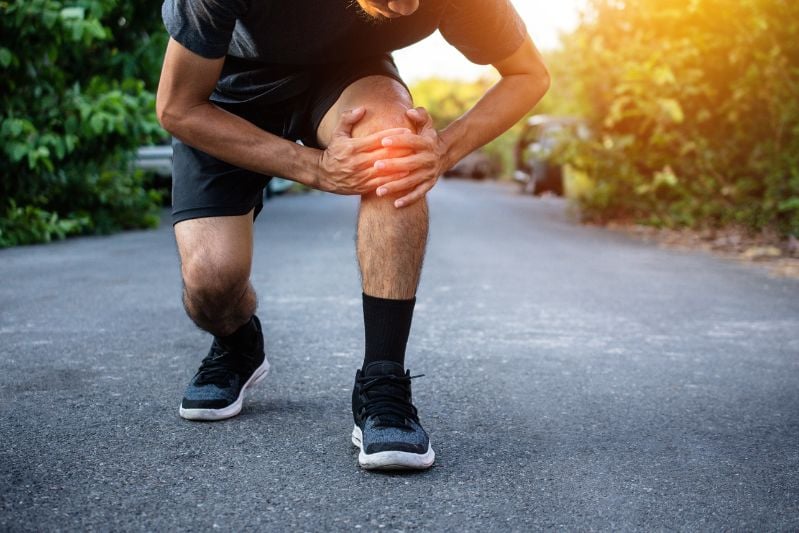
Austin runs. The Butler Trail around Lady Bird Lake fills up before sunrise, the Barton Creek Greenbelt stays busy year round, and half of Southwest Austin seems to be training for something. Between the Austin Marathon in February, the Cap10K in the spring, and a calendar packed with local 5Ks, there is always a reason to add a few more miles.
There is also always a reason for knees to start complaining.
Runner’s knee is the most common reason runners end up in our office. It shows up as a dull ache around or behind the kneecap that starts mild, gets worse the longer you run, and eventually follows you down the stairs and into your desk chair.
The frustrating part is that it almost never begins at the knee. It begins somewhere above it or below it, and the knee is simply where the complaint gets loud.
What Runner’s Knee Actually Is
Runner’s knee is the everyday name for patellofemoral pain syndrome, which describes pain at the joint between your kneecap and the groove in your thigh bone that it slides through. Every stride asks that kneecap to track cleanly through the groove while absorbing several times your body weight. When the tracking or the load gets slightly off, the tissue around the joint becomes sensitive.
The numbers explain why we see so much of it. A systematic review of running related injuries found that the knee is the single most affected region, with a prevalence of 31.2 percent, and that patellofemoral pain alone accounts for 16.7 percent, the highest of any specific diagnosis. That same review found injuries at or below the knee made up 79 percent of everything reported, and that roughly 44 percent of runners were dealing with an injury at any given point.
You are not unlucky. You are in the largest group there is.
How It Feels
- A dull ache around, behind, or just under the kneecap
- Pain that builds over a run rather than arriving with one sharp moment
- Trouble with stairs, especially going down
- Discomfort after sitting with the knee bent for a long stretch, sometimes called theater sign
- Occasional grinding or clicking as the knee bends
- Swelling that is mild or absent entirely
Sharp locking, a knee that gives way, significant swelling, or pain after a specific twisting injury points to something other than runner’s knee and needs to be evaluated on its own.
The Part Most Runners Miss
Here is the piece that changes how people think about this problem.
Your kneecap does not decide where it goes. It follows the thigh bone underneath it. When your hip is not controlling that thigh bone well, the femur rotates inward slightly on every landing, the knee drifts toward the midline, and the kneecap gets pressed against one side of its groove thousands of times per run.
That collapse usually traces back to the gluteal muscles on the side of the hip. They are responsible for keeping the pelvis level and the thigh stacked over the foot during single leg stance, which is exactly what running is. When they fatigue or were never strong to begin with, the knee absorbs the difference.
The foot matters on the other end. A foot that flattens and rolls in aggressively sends rotation up the shin into the same joint. So does a stiff ankle that cannot bend far enough, because the body finds the motion somewhere else.
The research backs this up clearly. A meta-analysis in the Journal of Orthopaedic and Sports Physical Therapy found that combined hip and knee strengthening outperformed knee strengthening alone for reducing pain and improving function in people with patellofemoral pain. Treating only the sore joint leaves results on the table.
Why It Started Now
Most runners can point to one of these when we ask the right questions:
Training volume that climbed too fast. Adding mileage, adding speed work, and adding a hill route in the same three weeks is the most common story we hear. Tissue adapts, but slowly.
Running through Austin heat. Summer running here changes form more than people realize. Fatigue late in a run means less hip control, and less hip control means more load through the knee.
Downhill and camber. Austin is not flat. Steady downhill running loads the kneecap harder than level ground, and always running the same direction on a cambered road or trail loads one leg differently than the other.
Shoes past their life. Most running shoes lose meaningful cushioning somewhere between 300 and 500 miles. Runners tend to notice long after their knees do.
A desk job in between. Eight hours of sitting shortens hip flexors and switches off glutes. Then you ask those glutes to stabilize every stride at 6 pm.
Skipping strength work entirely. Running is a sport. It is not a training program.
How Chiropractic Care Addresses Runner’s Knee
At Smith Family Chiropractic Austin, Dr. Josh Bonine and our team treat runner’s knee as a chain problem rather than a spot problem. That means the exam looks well past the knee.
A full lower body assessment. We check hip strength and single leg control, kneecap tracking and mobility, ankle range of motion, foot mechanics, and how your low back and pelvis move. We also want your training log, your shoe mileage, your usual routes, and which part of the run hurts first. That history frequently tells us more than any single test.
Joint work along the whole chain. Restoring motion at the hip, the knee, the ankle, and the lower back reduces the compensation that puts the kneecap under uneven pressure. A systematic review of manual therapy for patellofemoral pain found that treating the full kinetic chain, including the lumbosacral and sacroiliac joints rather than the knee alone, produced better pain and function outcomes.
Soft tissue therapy. Targeted work through the quadriceps, the IT band and its attachments, the hip rotators, and the calf reduces the tension pulling the kneecap off its track.
Advanced therapies where they fit. We use Class IV laser therapy, focused shockwave and PiezoWave therapy, and red light therapy to calm irritated tissue and support healing in cases that have been hanging on for a while.
Progressive strengthening. This is what makes the result stick. Hip abductor and external rotator work, controlled single leg loading, and gradual quadriceps strengthening rebuilt the capacity the joint was missing. It is the least exciting part of care and the most important one.
Gait and training adjustments. Sometimes the most valuable change is the simplest. An umbrella review of gait retraining for runners with patellofemoral pain found that increasing your step rate by 5 to 10 percent reduces knee loading and produces short term improvements in pain and function when introduced gradually. Shorter, quicker steps put less stress through the kneecap than long reaching ones.
Can You Keep Running?
Often, yes. Complete rest is rarely the best plan, because the knee needs load to rebuild tolerance and your fitness does not need to disappear in the meantime.
The usual approach is to keep runs at a length and pace that leave you at a two or three out of ten during the run, with no increase in pain the next morning. That may mean shorter runs, flatter routes, more walk breaks, and a pause on speed work and long downhills. As strength and mechanics improve, the distance comes back.
Staying Ahead of It
Strength trains your hips twice a week even during heavy mileage. Build weekly distance gradually rather than in jumps. Track your shoe mileage and replace them on schedule. Vary your routes so you are not always running the same camber or the same hills. Running easy days is genuinely easy. And when a new ache shows up, deal with it in week one rather than week six.
Ready to Run Without the Ache?
You do not have to shelve your training plan or live on ibuprofen to get through a long run. Our Southwest Austin team works with runners constantly, and most people start noticing real change within the first few visits.
Call (512) 892-0544 or book your evaluation online. We are at 5501B US-290 in Austin, with same week appointments available. Tell us what you are training for, and we will build a plan that gets you there.
Frequently Asked Questions
How long does a runner’s knee take to heal? Cases caught within the first few weeks often settle in four to eight weeks with the right strengthening program and training adjustments. Pain that has been present for several months usually takes longer, because the surrounding muscles have to rebuild strength and control rather than simply calm down. Starting care early shortens the timeline noticeably.
Can I keep running with runner’s knee? Usually yes, with modifications. Most runners do better reducing distance, avoiding long downhills and speed work temporarily, and adding strength work, rather than stopping completely. Your plan should tell you specifically what to keep and what to pause.
Is runner’s knee the same as IT band syndrome? No, though they often travel together. Runner’s knee produces pain around or behind the kneecap. IT band syndrome produces pain on the outside of the knee, typically at a consistent point in a run. Both frequently trace back to hip control, which is why the assessment covers the same ground.
Does a chiropractor treat knees, or only backs? Chiropractors are trained to evaluate and treat the joints and soft tissues of the whole body, including the knee, hip, ankle, and foot. Extremity and sports care is a routine part of practice.
Do I need an MRI for knee pain from running? Usually not. Patellofemoral pain is diagnosed through history and physical examination. Imaging is considered when symptoms do not respond as expected, when there was a specific traumatic injury, or when the presentation suggests something structural such as a meniscus tear.
Will a knee brace or strap fix a runner’s knee? A patellar strap or sleeve can reduce pain during a run by changing how load transmits around the kneecap, which makes it useful in the short term. It does not build hip strength or change your running mechanics, so it works best alongside active care rather than instead of it.
5501B US-290, Austin, TX 78735
We Create Healthy Families!
You Deserve To Feel Great. We Can Help!
Your go-to Chiropractor in Austin, TX

Dr. Joshua Bonine
5501B US-290, Austin, TX 78735
+1 (512) 892-0544
Monday: By Appointment
Tuesday: 7:00 am – 10:30 am, 3:00 pm – 6:00 pm
Wednesday: By Appointment
Thursday: 3:00pm-6:00pm
Friday: 7:00am-10:30am
Weekends: Closed
Special appointments available by request
© 2025 Smith Family Chiropractic, All Rights Reserved